
10 Surf Tips for Beginners That Actually Help
That first wave nearly always ends the same way – a rushed pop-up, feet in the wrong spot, and a mouthful of salt water. That is normal. The best surf tips for beginners are not about looking good early. They are about building a feel for the ocean, staying safe, and stacking small wins until surfing starts to click.
Learning to surf can look simple from the beach. Paddle out, catch a wave, stand up, done. In reality, the hardest part is not the standing. It is timing, positioning, patience, and knowing what the ocean is doing underneath you. Get those right, and everything else gets easier.
Surf tips for beginners that matter most early
A lot of new surfers burn energy on the wrong things. They buy too much gear, paddle for every wave, or head out in conditions that are well above their level. If you are starting out, progress comes faster when you keep it simple and stay consistent.
The first thing to get right is your board. Bigger is better when you are learning. A soft-top with plenty of volume gives you stability, forgiveness, and more waves. That means more chances to practise your paddle, pop-up, and balance. A shortboard might look sharper under your arm, but it will usually slow your progress.
The second thing is choosing the right break. Clean, small waves with a sandy bottom are your friend. Waist-high surf is enough. Anything punchy, crowded, or shallow can turn a good session into a survival exercise. There is no prize for making learning harder than it needs to be.
Then there is timing. New surfers often paddle too late because the wave looks steeper than it is, then panic when it finally lifts them. Start paddling earlier than you think. Commit to the wave. A few strong strokes at the right moment are worth more than frantic splashing once the wave is already under you.
Read the ocean before you paddle out
One of the most useful surf tips for beginners has nothing to do with standing up. Spend a few minutes watching the break from the beach. Notice where waves are peaking, where they are closing out, and where surfers are getting in and out easily.
Look for channels, which are deeper spots where waves break less often. They can give you an easier path out the back and save a lot of energy. Watch how sets come through. Many beaches have a rhythm – a few bigger waves, then a lull. If you can spot that pattern, you can choose your paddle-out and wave selection better.
Also pay attention to the wind and tide. Glassy or light offshore mornings are usually friendlier than strong onshore afternoons. A beach can be mellow at one tide and messy at another. This is where local knowledge matters. Ask questions, stay humble, and treat every surf spot like it has its own rules.
Your pop-up should be simple, not fast
Most beginners think they need to spring to their feet in one explosive move. Speed helps, but clean technique matters more. If your hands land too far forward or your feet are too narrow, you will stand up only to fall straight away.
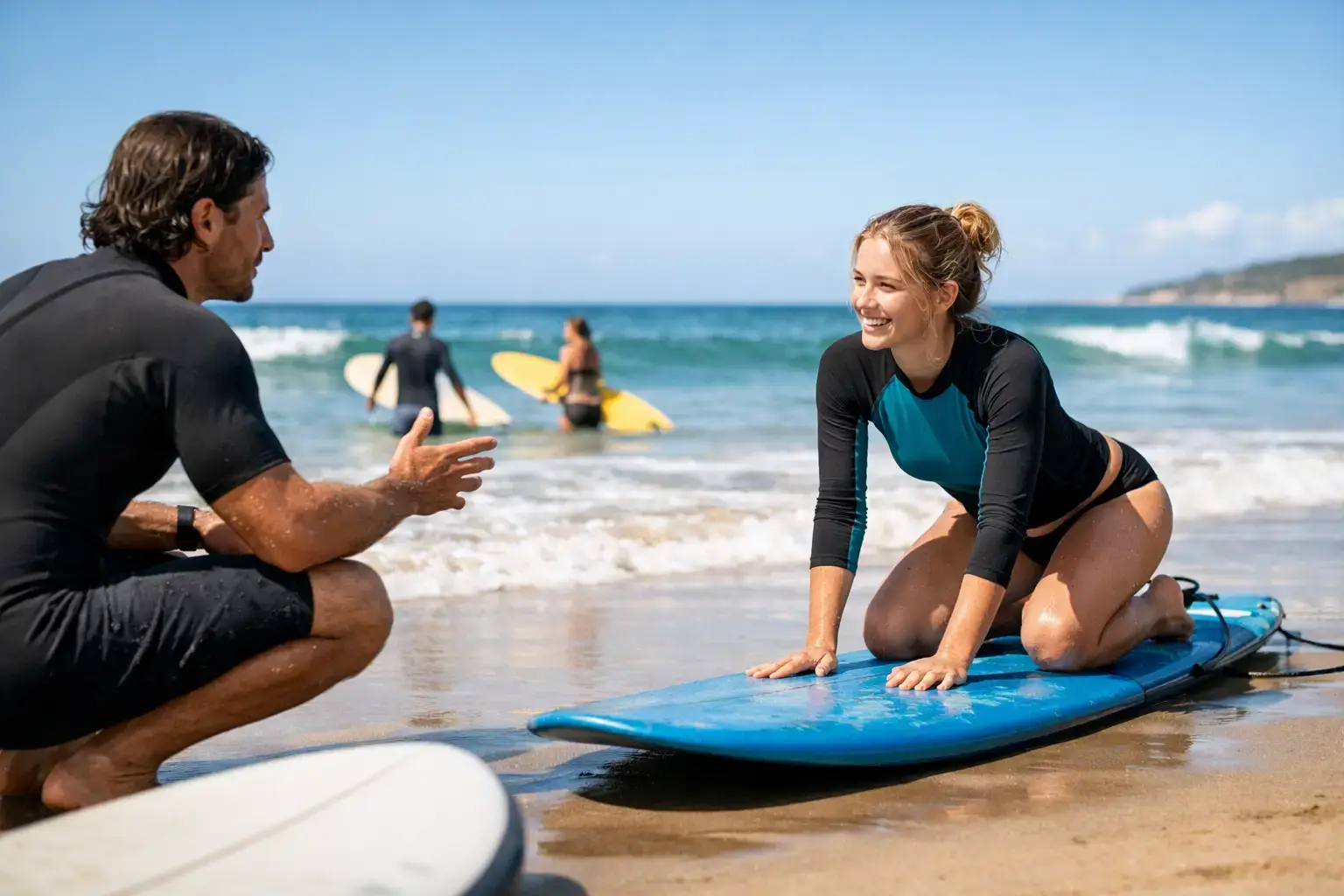
When you feel the wave pick you up, keep your chest low and your eyes forward. Place your hands near your ribs, not up by the nose. Push up in one smooth motion and bring your feet underneath you, landing in a balanced stance. Front foot near the middle, back foot over the tail area, knees bent, arms relaxed.
The biggest fix for a shaky pop-up is often your gaze. Beginners look down at their feet, and the whole body follows. Look where you want to go. Your body is better at finding balance when your head stays up and your line of sight stays forward.
Practising the movement on land helps. Not because land practice replaces water time, but because it removes the chaos for a minute. A few clean reps before a session can sharpen the motion and make it feel less rushed once you are in the surf.
Paddle smarter and save your energy
Paddling wears beginners out fast. Usually it is because they lie too far back, lifting the nose, or too far forward, pushing water. The sweet spot is where the board sits fairly level and glides rather than ploughs.
Keep your chest lifted slightly, but do not crank your neck. Cup your hands and use long, smooth strokes. Try not to slap the water. Efficient paddling is quiet and steady. It is less dramatic than people expect.
There is also a difference between paddling to move and paddling to catch a wave. When you are getting into position, stay relaxed and save your power. When you commit to a wave, paddle with intent. Strong, even strokes create momentum, and momentum is what gets the board sliding early enough for a clean take-off.
Learn lineup manners early
Surf culture has room for learners, but not for people who ignore basic etiquette. Respect in the water matters. It keeps everyone safer and makes the whole session better.
The main rule is simple – do not take off on a wave if someone closer to the peak is already going. That is called dropping in, and it is one of the quickest ways to lose goodwill in the lineup. If you are unsure who has priority, back off. Better to miss one wave than create a mess.
Hold onto your board when you can, but not at the cost of injuring yourself. If a wave is about to separate you from it, protect your head and surface carefully. A flying board in a crowded break is dangerous. This is another reason beginner-friendly, uncrowded banks are worth seeking out.
And if you are paddling back out, do not head straight through the face where someone is riding. Angle toward the whitewater or shoulder to stay out of their path. A bit of awareness goes a long way.
Falling is part of the lesson
Nobody loves wipeouts early on, but they teach you plenty. They show you when you hesitated, when you stood too tall, or when you picked the wrong wave. If you treat every fall as proof you are hopeless, surfing gets frustrating fast. If you treat it as feedback, you improve.
Try to fall flat when you can rather than diving headfirst. Protect your head with your arms if things get messy. Once you surface, get a quick look around before your board or the next wave finds you. Staying calm after a fall is a real skill, and it matters more than people realise.
There is also a mental side to beginner surfing that catches people off guard. Progress is uneven. One session you catch five waves and feel switched on. The next session nothing works. That does not mean you have gone backwards. It usually means the conditions changed, your timing was off, or you are learning something new that has not settled in yet.
Small waves build real surfers
Big surf gets attention. Small surf builds foundations. If you want to improve quickly, spend time in clean, manageable waves and focus on catching more of them. More waves means more reps, and more reps mean better instincts.
This is where confidence starts to feel real. Not from surviving something heavy, but from reading a peak, paddling early, popping up cleanly, and trimming along the face with control. Those moments are what keep people coming back.
It also helps to keep sessions focused. Pick one thing to work on. Maybe it is your pop-up, maybe it is looking down the line, maybe it is simply catching waves earlier. Trying to fix everything in one surf usually leads to frustration.
Gear helps, but habits matter more
You do not need a boot full of equipment to start surfing well. You need a board that suits your level, a leash you trust, wax that matches the water temp, and a wetsuit if the season calls for it. Beyond that, your best tools are consistency and awareness.
Surf often enough to stay familiar with the feeling. Watch better surfers and notice the quiet details – where they sit, when they turn, how little they rush. If you can, surf with people who know more than you. A quick tip on the beach can save months of guessing.
At Salt Born, that is part of the whole point of surf life – not just chasing the next session, but learning how to belong in the ocean a little more each time.
The cleanest path forward is usually the least glamorous one: choose softer waves, ride a bigger board, respect the lineup, and keep showing up. One good take-off turns into three. Three turn into a proper run down the line. Then one day you stop thinking about every movement, and start feeling the wave instead. That is when surfing really begins.

2 Responses